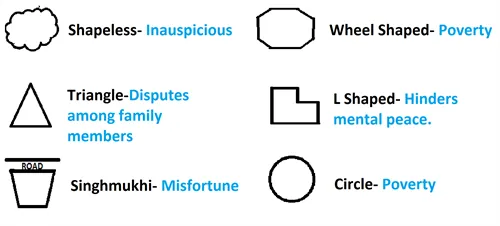
Introduction: Directional Expansion and Shape Influence
In Vastu Shastra, not only the basic shape of a plot but also its directional expansion plays a crucial role in determining life outcomes. An extension or cut in a particular direction alters the natural energy balance of the land.
Classical texts explain these effects symbolically, based on how cosmic energy enters, settles, or escapes from a space.
---North‑East (Ishan) Direction Expansion: A Highly Auspicious Feature

When the North‑East (Ishan) corner of a plot is extended, it is considered highly auspicious in classical Vastu Shastra.
Classical Results of Ishan Extension
- Increase in name, fame, and recognition
- Overall happiness and life satisfaction
- Better clarity of thought and decision‑making
- Support from mentors, elders, and authority figures
The North‑East represents clarity, purity, and incoming cosmic energy. When this zone is expanded, the plot naturally receives and retains positive flow.
Such plots are traditionally recommended for:
- Residential houses
- Educational or spiritual spaces
- Homes seeking peace and long‑term stability
Semi‑Circular / Half‑Moon Shaped Plot (Ardha‑Vartulakar)

A plot shaped like a half circle is known as an Ardha‑Vartulakar or Ardha‑Chandrakaar plot. Classical texts consider this shape inauspicious for residence.
Why This Shape Is Considered Unfavorable
- Lack of clear boundaries causes energy leakage
- Instability in mental and emotional state
- Difficulty in sustaining health and comfort
Continuous curves without angular anchoring fail to retain energy, leading to unpredictability and discomfort.
Traditionally Observed Effects
- Physical discomfort or recurring health issues
- Fear, insecurity, or stress
- Financial loss or instability
- Difficulty in maintaining household harmony
Such plots are generally avoided for residential purposes in classical Vastu planning.
---T‑Shaped Plot (T‑Junction or T‑Layout Plot)
A plot resembling the English letter “T” is known as a T‑shaped plot. This shape is traditionally considered highly unstable for living purposes.
Symbolic Interpretation
The T‑shape creates:
- Direct energy impact without buffering
- Continuous pressure on the central axis
- Lack of containment and protection
Commonly Reported Results
- Recurring financial problems
- Health disturbances
- Persistent stress or dissatisfaction
- One problem resolving only to be replaced by another
In classical understanding, T‑shaped plots prevent long‑term peace because energy flow remains aggressive and unsettled.
Important Classical Reminder
Shape creates tendency, not destiny.
However, irregular shapes demand far greater discipline,
planning, and corrective zoning to reduce their negative impact.
Ignoring shape effects often leads to confusion, where people apply remedies but see inconsistent results.
---Conclusion: Direction and Shape Must Be Evaluated Together
In Vastu Shastra, both directional expansion and overall plot shape determine how energy behaves within a space.
- North‑East expansion enhances clarity and success
- Semi‑circular shapes diffuse stability
- T‑shaped plots create continuous pressure and unrest
Final Insight:
A wise Vastu decision is made before construction,
by understanding land behavior—not after problems arise.